
Your child’s first words are magic. But when communication feels like a struggle — for them or for you — it can be stressful and isolating. You’re not alone, and early support makes a real difference.
At Brighter Days, our Speech-Language Pathologists (SLPs) understand that every child communicates in their own way and on their own timeline. Our role isn’t just to work with your child — it’s to partner with you, teaching you the strategies and techniques you can use every day, during the routines you’re already doing, to help your child find their voice.
Whether your child is not yet talking, has difficulty being understood, or is struggling with feeding and swallowing, our experienced SLPs provide personalized, family-centered care that fits into real life. Sessions happen in your home, at daycare, or in the community — because that’s where communication actually grows.
All Brighter Days Speech-Language Pathologists hold their Certificate of Clinical Competence (CCC-SLP) and are licensed in Pennsylvania.
Our Speech-Language Pathologists can help with:
Signs Your Child May Benefit from Speech Therapy
Every child develops at their own pace, but here are some signs that a speech-language evaluation may be a good idea:
Comprehension is a great sign! But if your child’s expressive language (the words they say) seems delayed compared to what they understand, it’s worth getting an evaluation. Early support can make a big difference, and it’s always better to check than to wait.
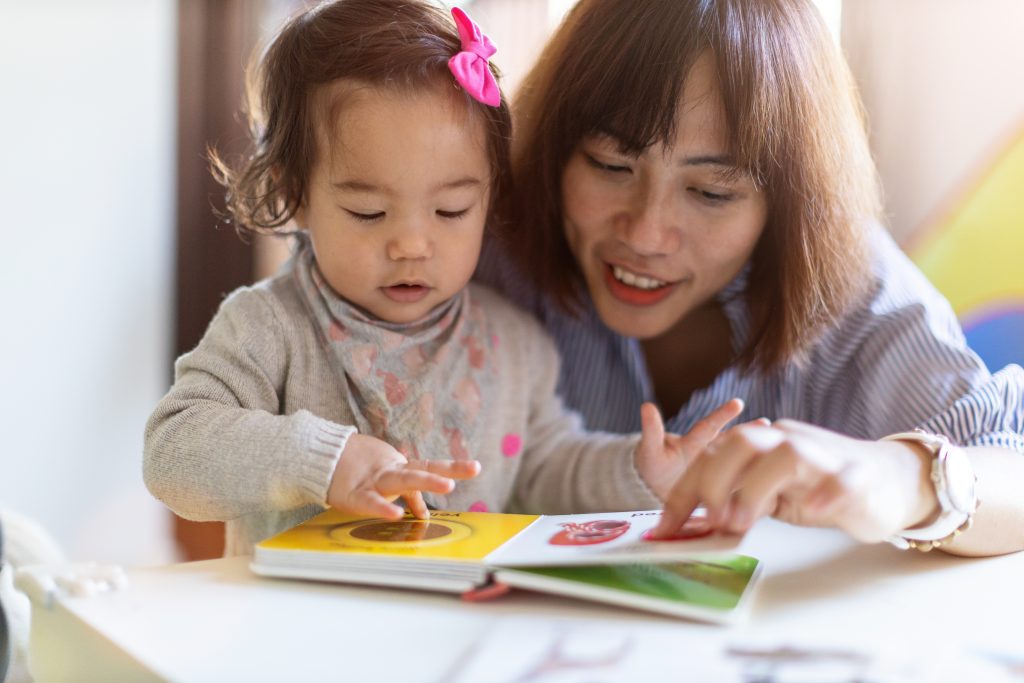
Sessions are play-based and feel natural — think bubbles, books, snack time, and favorite toys. Your SLP will coach you on how to encourage communication during these everyday moments. You’ll leave each session with practical strategies to use throughout the week.
Being raised in a bilingual household is not a cause of speech delay. Our SLPs are experienced working with multilingual families and will consider your child’s full language environment when evaluating and supporting their communication. We also offer interpretation services.
Our SLPs are trained to evaluate and support Augmentative and Alternative Communication (AAC). If your child would benefit from a communication device or system, we’ll work with you and your team to explore the right options.
Yes — early intervention speech therapy is provided at no cost to eligible families in Pennsylvania. Call us at 215-550-6109 to find out if your child qualifies.
We believe that the foundation, central influence and main source of support in a child’s life is family. Therefore, we encourage and support family members to be active participants in their child’s intervention services. We’re sensitive to each family’s customs and values, and honor cultural diversity and family traditions.
If you’ve started noticing things — your child isn’t making eye contact the way you’d expect, or they’re not responding to their name, or something just feels different — we want you to know: reaching out early is the most powerful thing you can do.
Only offered by a small number of agencies in Philadelphia. Specialized support for children who have experienced trauma or are showing signs of social-emotional difficulty. Our ITSE specialists teach families strategies to promote emotional wellness, healthy attachment, and resilience from the ground up.

When your child is going through early intervention, it’s easy to focus entirely on their development — the milestones, the therapies, the goals. But the truth is, children don’t grow in isolation. They grow in families. And families face real challenges every day.

From the moment a baby is born, their brain is making connections at a remarkable pace. Those first three years are a window of incredible opportunity — and Special Instruction is designed to make the most of every single day within it.

Watching your baby reach their first physical milestones — lifting their head, rolling over, sitting up, taking those first wobbly steps — is one of the greatest joys of parenthood. When those milestones are delayed or seem difficult, it’s natural to worry. Physical Therapy is here to help.

Every child learns to navigate the world in their own way — through touch, movement, play, and daily routines. When those everyday activities feel overwhelming or out of reach, Occupational Therapy can help.
